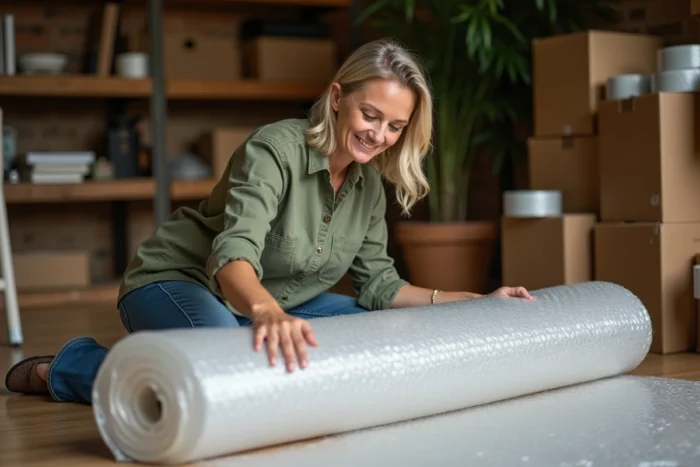
Bubble wrap is a polyethylene plastic film made up of small, regular air pockets. Its function is to absorb shocks during the transport of fragile items, whether for moving, shipping packages, or temporary storage. Buying a new roll represents a significant cost, especially when the necessary quantities increase. Recovering bubble wrap for free is entirely possible, provided you know where to look and when to act.
Free bubble wrap in stores: target backrooms
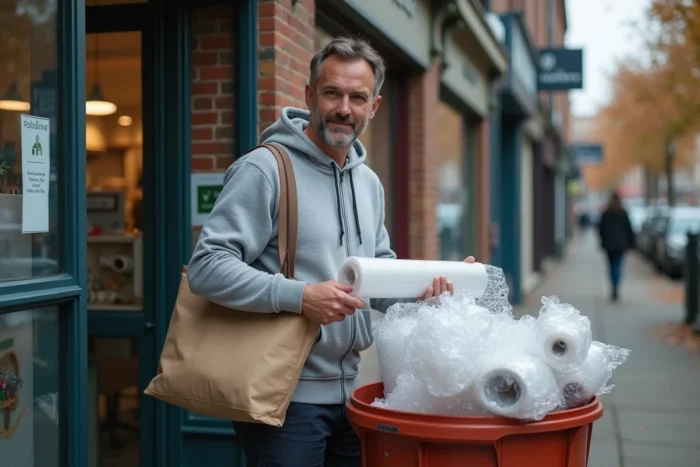
Businesses that receive regular deliveries of fragile goods accumulate considerable volumes of bubble wrap. This material often ends up in the recycling bin due to a lack of reuse on-site.
Appliance and electronics stores are the first to approach. Televisions, monitors, printers, and small electronic devices consistently arrive cushioned in bubble wrap. Home decor and furniture stores also receive lighting fixtures, mirrors, and dishware individually wrapped.
The most effective approach is to ask directly the person in charge of the stockroom, rather than at the checkout. Specify that you are collecting used bubble wrap, the kind that would be thrown away anyway. Delivery days are the best time to stop by, usually at the beginning of the week. A phone call the day before can prevent an unnecessary trip.
To find where to reliably find free bubble wrap, pharmacies and opticians are also an underestimated option: their deliveries include glass bottles and frames protected by small-format bubble wrap, perfect for cushioning dishware or knick-knacks.
Donation platforms between individuals: bubble wrap in local groups
Donation websites and groups are full of ads offering packing materials after a move. A person who has just moved in no longer has any use for their rolls of bubble wrap and is simply looking to get rid of them.
Local Facebook groups of the type “donations” or “rescues” are particularly active in this niche. Type “bubble wrap” in the search bar of your city’s group. Ads mainly appear between May and September, the period when most moves take place.
- Donnons.org and Geev allow filtering by location and regularly offer packaging lots, including bubble wrap
- Le Bon Coin, in the “free” category, displays ads from individuals giving away their moving supplies in bulk (boxes, bubble wrap, kraft paper)
- Neighborhood or residence Facebook groups work well for modest quantities, with quick pickup from the donor
Responsiveness matters. An ad for free bubble wrap often receives several responses within the hour. Activate group notifications so you don’t miss any posts.
Waste disposal sites and resource centers: recover bubble wrap before sorting
Municipal waste disposal sites receive regular volumes of packaging materials dropped off by individuals. In most cases, bubble wrap ends up in the plastics bin with no possibility of reuse.
Some waste disposal sites allow the recovery of materials in the reuse area, when it exists. The policy varies from one municipality to another. A call to your town’s waste service clarifies the rules in effect.
Resource centers and recycling centers systematically practice reuse. These organizations collect objects and materials that are still usable before they are destroyed. Good condition bubble wrap is often available there for free or for a nominal fee.
When to visit the waste disposal site to maximize chances
Spring and summer weekends correspond to peak drop-off times related to moves. The following Mondays and Tuesdays are also favorable, as professionals drop off their packaging at the beginning of the week.
Check the condition of the recovered bubble wrap. The bubbles must be intact and still inflated to ensure proper protection. A film with burst pockets no longer protects anything.
Free alternatives to bubble wrap for protecting your items
European regulatory pressure on single-use plastic packaging is intensifying. Zero Waste France reports that EU member states now have the right to ban certain plastic packaging, accelerating the search for substitutes. Bubble wrap, as a polyethylene film, is under scrutiny from these policies.
Brands and specialized shops are already offering cushioning solutions made from reuse: cut corrugated cardboard, honeycomb paper, bubble wrap made from recycled material. Some of these alternatives are distributed for free to customers as part of waste valorization.
- Crumpled newspaper provides effective cushioning for dishware and small items, provided multiple layers are used
- Napkins and dish towels wrap glasses and plates while reducing the volume of plastic waste after moving
- Cut corrugated cardboard strips can be slipped between items in a box and absorb lateral shocks
These solutions do not replace bubble wrap for very fragile items or irregular shapes. For a screen, a mirror, or a sculpture, bubble wrap remains the most suitable cushioning due to its ability to wrap and absorb impacts.
Recovering bubble wrap for free mainly requires timing and a minimum of organization. Stores, donation platforms, and resource centers cover the vast majority of needs. Keeping a recovered roll in a closet after use, rather than throwing it away, also allows someone else to benefit from it during the next move.