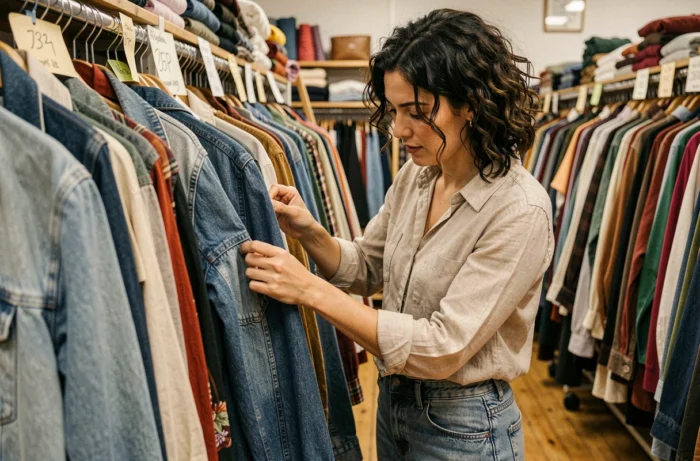
This growth in the second-hand textile market, however, hides significant disparities between sales channels, and the real benefit for the buyer, both economic and environmental, depends on parameters that the overall figures do not reveal. Buying second-hand clothing deserves a more nuanced understanding than the simple reflex of “cheaper, greener.”
Average second-hand price versus entry-level new: a narrowing gap
The Refashion 2025 study points out a counterintuitive fact: the average price of a second-hand item is approaching that of an entry-level new garment. The savings are therefore no longer automatic. They depend on the channel chosen by the buyer.
| Purchase Channel | Average Price Level | Guarantee / Traceability |
|---|---|---|
| Peer-to-peer platforms (Vinted, LeBonCoin) | Lowest on average | Variable, depends on the seller |
| Solidarity networks (Oxfam, Emmaüs) | Very low, often below platforms | Sorting and control in-store |
| Independent thrift stores | Intermediate, with curated selection | Visual inspection in-store |
| Brand corners and specialized online shops | Close to entry-level new | Detailed description, sometimes certificate of authenticity |
Solidarity networks like Oxfam offer the most accessible prices while ensuring physical sorting of items. Brand corners, on the other hand, charge for curation and authenticity guarantees, which reduces the price advantage. To make a useful comparison, one must relate the price to the quality level of the garment, not just to the fact that it is second-hand.
Several elements related to price and quality trade-offs are detailed in the information from the Ei Mag website, particularly regarding common pitfalls during a first purchase.
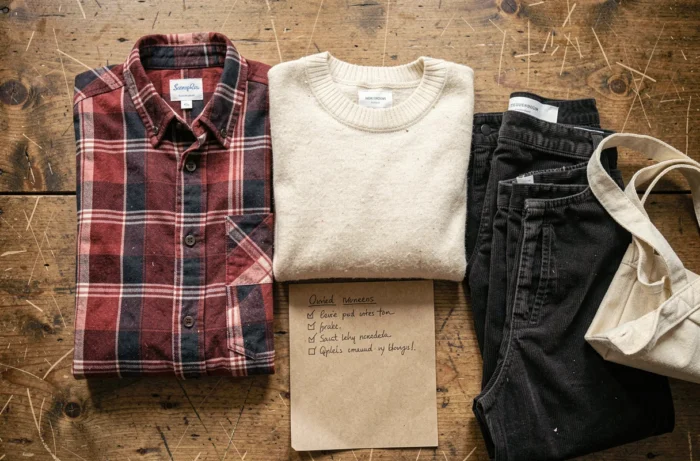
Environmental impact of second-hand clothing: the channel makes all the difference
The ecological argument is often put forward to justify the purchase of second-hand items. However, available data shows that the distribution channel weighs as much as the second-hand nature of the garment in the environmental assessment.
Online resale platforms for clothing risk diminishing the virtuous effect of second-hand for the environment. The mechanism is simple: the ease of resale encourages buying more new items (rebound effect), and individual parcel shipments multiply transport-related emissions.
- A purchase at a local solidarity shop eliminates long-distance transport and individual packaging, resulting in a much more favorable carbon footprint.
- A purchase on a peer-to-peer platform involves a unit postal shipment, sometimes over several hundred kilometers, which reduces the environmental gain.
- Specialized stores that pool flows (group collection, in-store sales) are positioned between the two.
Buying second-hand does not automatically guarantee an ecological gesture. The location and delivery method count as much as the status of the garment.
Traceability and actual condition of items: the main barrier
Refashion identifies in 2025 the lack of reliable data on flows and the preparation of items as an obstacle to structuring the market. For the buyer, this translates into a concrete difficulty: assessing the actual condition of a garment before purchase.
On peer-to-peer platforms, the description depends entirely on the seller. Level of cleaning, repairs made, commercial origin of the item: nothing is standardized. Photos may conceal localized wear (collar, cuffs, internal seams).
Verification points before an online second-hand purchase
- Request additional photos of common wear areas: collar, armholes, knees, zippers.
- Check if the seller specifies the textile composition and brand, two elements that help estimate the remaining lifespan.
- Prefer sellers who describe any repairs or defects, a sign of transparency that reduces the risk of unpleasant surprises.
- In physical stores or thrift shops, inspect internal seams and test closures. A garment with still soft and even seams has generally been worn little.
Physical stores (thrift shops, solidarity shops) offer the advantage of touch and trying on. Trying on remains the best filter against impulsive buying and size errors, a recurring issue on online platforms where returns can sometimes be complicated or costly.
Regulation of new items and lack of framework for second-hand
The AGEC law imposes increasing obligations on manufacturers of new clothing, particularly regarding environmental labeling. These constraints do not apply to clothing resold between individuals or by second-hand structures.
This regulatory asymmetry has a direct consequence for the buyer: no sustainability score or standardized product sheet accompanies a second-hand garment. The assessment of quality relies entirely on personal judgment or the seller’s reputation.
This lack of framework explains why structured market players (specialized shops, solidarity networks) provide measurable added value compared to transactions between individuals. Their sorting, quality control, and standardized descriptions partially compensate for the regulatory void.
The second-hand textile market is progressing, but its real interest varies greatly depending on the chosen channel. The price gap with entry-level new is narrowing, the environmental assessment depends on the distribution method, and traceability remains the weak link. Comparing the channel before comparing the price remains the most useful data for a truly advantageous purchase.