
You return from a forty-minute run in the heat, open the fridge, and hesitate between a bottle of Powerade and a can of Coca-Cola. The instinct is common, but these two drinks have neither the same composition nor the same effect on the body.
Powerade is formulated to compensate for losses related to physical exercise, while Coca-Cola remains a pleasure soda, rich in simple sugars and devoid of electrolytes. Comparing the two is like putting a sports hydration product against a recreational drink.
Nutritional composition: sugar, sodium, and electrolytes face to face
We often look at the sugar content first, and we are right to do so. A can of classic Coca-Cola provides about 10 g of sugar per 100 ml, which corresponds to more than six pieces of white sugar per 33 cl can according to CREDOC data. Powerade also contains carbohydrates, but its formulation includes sodium and electrolytes designed to compensate for what sweat takes away.
The difference doesn’t stop there. Coca-Cola provides neither sodium nor potassium in significant amounts. After exertion, it therefore does not replace anything that the body has lost. Powerade, on the other hand, integrates these minerals in a ratio designed for intestinal absorption during or after exercise.
To delve deeper into the Powerade vs Coca-Cola match from a nutritional standpoint, sodium content remains the most discriminating criterion between a sports drink and a classic soda.
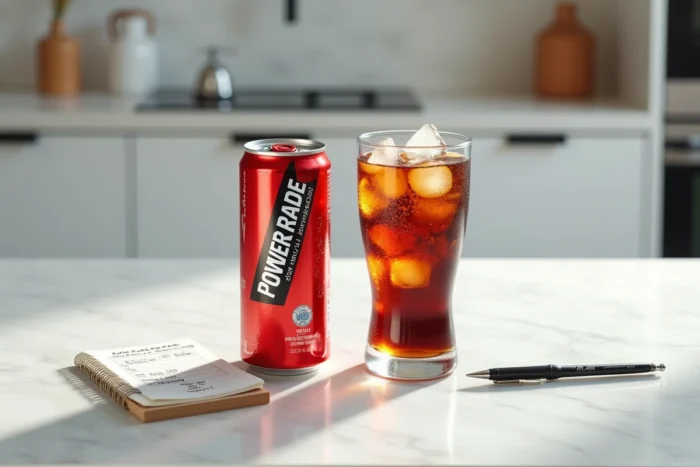
Powerade during exertion: when the sports drink is truly justified
We regularly see football players drinking Powerade on the sidelines. This is not a coincidence of sponsorship (even if contracts weigh heavily in brand choices in the professional field). Beyond 60 minutes of continuous effort, the intake of carbohydrates and sodium becomes a real lever for performance.
Below this duration, plain water is sufficient in most cases. The body has glycogen and mineral reserves that are more than adequate for a thirty-minute jog or a typical weightlifting session. Consuming a sugary drink in this context amounts to adding calories without measurable benefit.
Situations where Powerade has a concrete interest
- Endurance efforts exceeding one hour (running, cycling, full football match) with significant sweating
- Training in high heat where sodium losses are exacerbated and where water alone does not compensate for electrolyte balance
- Recovery phase after intense effort, in addition to solid food intake
Outside of these specific cases, Powerade remains a sugary drink whose regular consumption without associated effort contributes to a caloric excess.
Coca-Cola and digestive health: a persistent false remedy
It is still heard that Coca-Cola cures gastroenteritis or helps with digestion. Digestive doctors remind us that the opposite occurs, especially in children. Its very high sugar content creates an osmotic load that draws water into the intestine. The result: Coca-Cola can worsen diarrhea and dehydration instead of correcting them.
Current recommendations point towards balanced oral rehydration solutions (water, sodium, glucose in controlled amounts). The profile of a well-formulated sports drink is closer to this than that of a classic soda, even if neither Powerade nor Coca-Cola replaces a pharmaceutical solution.
Impact on the kidneys and skeleton
Carbonated sodas like Coca-Cola are regularly implicated in the risks of kidney stones. Isotonic drinks like Powerade do not receive the same reports in the available medical literature. The phosphoric acid present in Coca-Cola is also associated with bone weakening when consumed in excess over the long term.
For both the kidneys and bones, daily soda consumption represents a cumulative risk that Powerade does not share in the same proportions, provided it is not made a daily drink either.

Sweeteners and “zero” versions: a false escape route
Choosing Coca-Cola Zero or Powerade Zero to avoid sugar seems logical. Carbohydrates are replaced by intense sweeteners (aspartame, acesulfame-K, sucralose depending on the formulations). The sweet taste is there, the calories disappear.
The problem lies elsewhere. Sweeteners maintain the craving for sweetness and can disrupt the insulin response according to several recent studies. In a sports context, a zero version of Powerade also loses some of its interest: without carbohydrates, it no longer provides the quick energy that justifies a performance drink.
- Coca-Cola Zero eliminates calories but retains phosphoric acid and caffeine, two components whose excess poses problems
- Powerade Zero keeps the electrolytes but removes the useful carbohydrate fuel during exercise
- Water remains the only drink whose daily consumption requires no special precautions
What choice according to your profile: regular athlete or occasional consumer
For an athlete who trains several times a week with long sessions, keeping Powerade on hand makes sense. It is used during or just after exertion, not at the table or in front of a screen. Outside of a sports context, Powerade has no more health legitimacy than Coca-Cola.
For occasional pleasure consumption, Coca-Cola poses no acute problem. It is the regularity that creates the risk: a glass per week does not have the same metabolic effect as a can per day. Feedback varies on this point according to individual metabolic profiles, but the general trend is clear.
Between the two, plain or slightly mineralized water covers all daily hydration needs without any of the listed drawbacks. Neither Powerade nor Coca-Cola should occupy the place of the main drink in a typical day. The former is justified in a specific sports context, while the latter remains a pleasure to be measured.