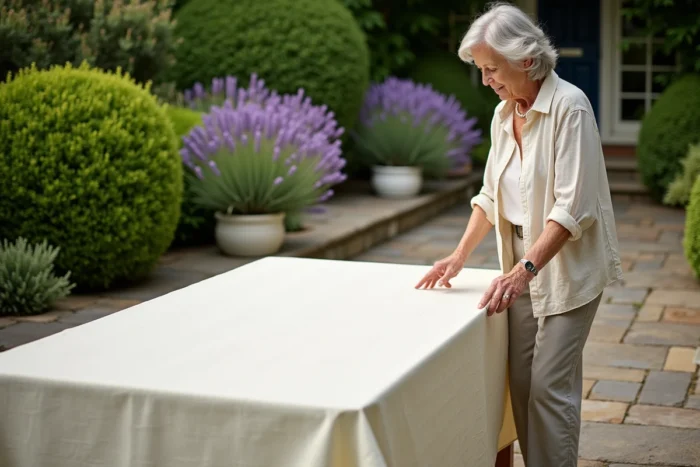
Choosing a tablecloth for your garden table may seem trivial, until the fabric fades after a few weeks of exposure. UV resistance is the least visible criterion at the time of purchase, yet it determines the actual lifespan of the product. In recent years, options have multiplied between coated fabrics, recycled acrylics, and transparent PVC tablecloths, without labels always allowing for an objective comparison of their sun resistance.
Anti-UV treatment of outdoor tablecloths: what labels do not specify
The mention “anti-UV” on a garden tablecloth does not refer to any unique textile standard. Some manufacturers refer to a simple addition of stabilizers within the fabric, while others indicate a surface coating that blocks part of the ultraviolet radiation.
The difference is far from cosmetic. A mass treatment, typical of dyed acrylic fabrics, resists abrasion and successive washes. A surface treatment, common on coated polyester tablecloths or oilcloths, can deteriorate over time, especially if abrasive cleaning products are used.
Field reports vary on this point: some coated tablecloths retain their color for several seasons, while others fade by the first summer. The exact composition of the coating (acrylic, PVC, polyurethane) plays a crucial role, but it is rarely listed on the packaging. To assess whether a UV-resistant outdoor tablecloth lives up to its promises, it is better to rely on the type of fiber and the dyeing process rather than just the logo printed on the label.
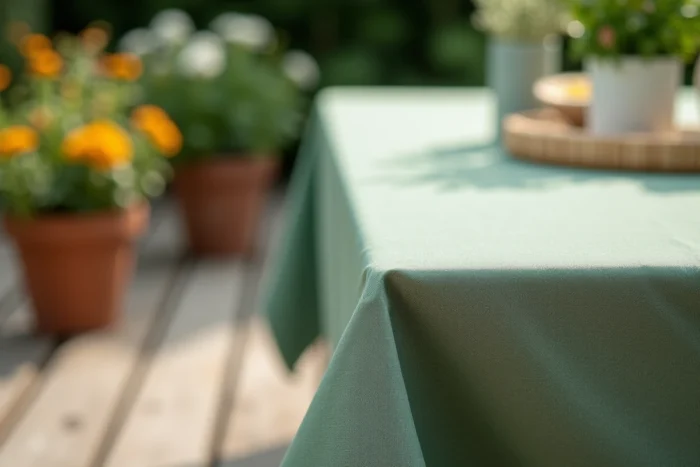
Acrylic fabric, coated fabric, or transparent tablecloth: comparison of materials for outdoor use
The choice of material determines both sun protection, maintenance, and the aesthetic appearance on the table. Three main categories dominate the garden tablecloth market.
Mass-dyed acrylic fabric
This is the reference material for UV resistance outdoors. Pigments are integrated directly into the fiber before weaving, preventing fading even after prolonged exposure. Brands specializing in outdoor textiles (for awnings, shade sails, garden cushions) have been using this process for a long time.
Mass-dyed acrylic retains its colors much longer than a coated fabric. It is also water-repellent and dries quickly after a rain shower. Its main drawback: a stiffer feel than a cotton tablecloth, and a significantly higher cost.
Coated fabric (coated cotton or coated polyester)
Coated fabric remains the most common choice for dressing a garden table. The base fabric (cotton or polyester) receives an acrylic or PVC coating that makes it waterproof and easy to clean. A simple wipe with a sponge is enough to remove most stains.
However, UV resistance entirely depends on the quality of the coating. A low-quality coated cotton can crack and yellow within a season. Polyester versions generally hold up better, as the synthetic fiber itself is more resistant to radiation.
Transparent PVC tablecloth
Often chosen to protect a wooden table without masking its appearance, the transparent tablecloth raises a specific question: untreated transparent PVC yellows under UV exposure. Stabilized versions exist, but their lifespan is still shorter than that of an acrylic fabric. They are better suited for semi-shaded use than for permanent south-facing exposure.
Recycled tablecloths and Oeko-Tex certification: an emerging selection criterion
The outdoor textile market is evolving towards more traceable materials. Manufacturers now offer recycled acrylic fabrics, water-repellent and anti-UV, compliant with Oeko-Tex standards. This certification guarantees the absence of harmful substances for health and the environment, which is relevant when the tablecloth comes into direct contact with food, bare arms, or children’s hands.
This combination (sun protection, recycled fiber, certified safety) changes the selection criteria. We no longer only look at whether the tablecloth resists the sun, but also where the fabric comes from and what it contains. The available data does not yet allow for conclusions about the long-term durability of these recycled fibers compared to virgin acrylics, but initial feedback is encouraging.
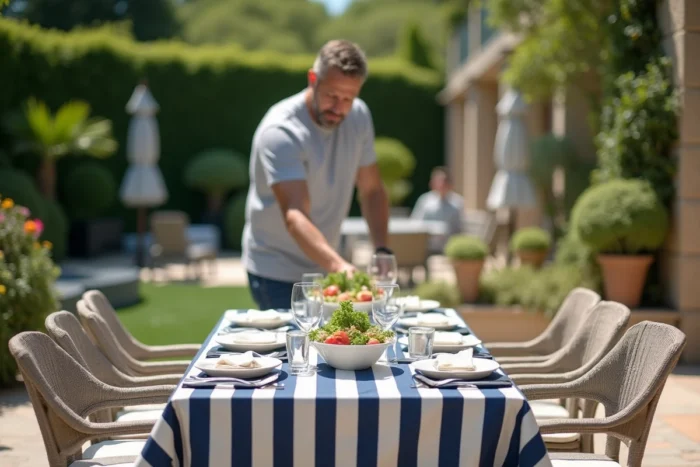
Size, fastening, and maintenance: details that extend the lifespan of the tablecloth
A tablecloth perfectly suited to the material but poorly sized or maintained will not last. A few concrete criteria should be checked before purchase:
- The size should allow for sufficient overhang (about twenty centimeters on each side for a rectangular table), but not excessive: a fabric that drags on the ground collects moisture and encourages mold.
- A fastening system (clips, elastics, weights sewn into the hems) prevents the wind from lifting the tablecloth. On an exposed terrace, this detail makes all the difference.
- Cleaning should be done without abrasive products or bleach, which attack surface anti-UV treatments. Warm water and neutral soap remain the safest method, regardless of the material.
- Off-season storage should preferably be done flat or rolled, never folded for long in the same spot: permanent creases weaken the coating and create areas of accelerated discoloration.
Storing the tablecloth in the shade between uses significantly extends its UV resistance, even for the most durable fabrics. Cumulative exposure matters as much as the intensity of the radiation.
Anti-UV garden tablecloth: questions that price alone cannot resolve
The price of an outdoor tablecloth varies considerably depending on the material, size, and brand. An entry-level coated fabric costs a fraction of the price of a mass-dyed acrylic. The temptation is strong to renew a cheap tablecloth every year rather than invest in a durable product.
This reasoning faces two limitations. The first is environmental: multiplying tablecloths thrown away after a season generates textile waste that is difficult to recycle, especially when they contain PVC. The second is practical: a tablecloth that fades alters the appearance of the entire garden table, and replacement in the middle of the season is not always simple.
The best compromise is to cross-reference the material (mass-dyed acrylic for full sun, coated polyester for semi-shaded use), any potential certification, and the fastening system. Color and patterns remain a personal choice, but dark shades and saturated prints reveal fading more quickly than light tones or stripes.