Leisure time is not managed by default. We have been observing a profound restructuring of leisure practices in France over several seasons, driven by two dynamics: the rise of regular sports as a lifestyle choice and the structuring of leisure time around a digital foundation, particularly among those under 30.
Understanding these mechanisms allows for making long-lasting leisure choices and identifying the time slots that are actually available in a typical week.
Digital foundation and identity-based leisure: how leisure time is actually structured
The analysis published by Aurlom in 2026, combined with data from INJEP, Médiamétrie, and Ipsos, reveals a layered model among young adults.
The first layer is a daily digital foundation: social networks, messaging, video games, streaming. This block occupies several hours a day and functions as a continuous background, not as a chosen leisure activity. The second layer groups one or two identity-based leisure activities (sports, creative practices, community engagement) that structure the week.
This architecture explains why so many people report a lack of free time while they objectively have it. The digital foundation absorbs available time slots without producing lasting satisfaction. We recommend mapping out actual time slots before seeking a new activity: often, the problem is not a lack of time but its passive distribution between screens.
To explore concrete options tailored to different profiles, the leisure guide from Ce Qu’il Faut Savoir offers a structured overview by activity category and time constraints.
Regular sports practice: the 2025 INJEP Barometer data changes the game
The national barometer of sports practices 2025 from INJEP provides useful numerical benchmarks to measure recent evolution. Weekly sports practice among those aged 15 and older has increased by seven points between 2018 and 2025. The dominant reason stated by practitioners is health and well-being, far ahead of competition or social connection.
The notable fact remains the reduction of the gap between men and women: it has fallen to one point in 2025. This convergence reflects a structural change, not a passing trend. Regular sports have become a component of daily life, on par with dietary management.
Choosing a lasting sports activity
A sustainable sports leisure activity relies on three verifiable criteria:
- Geographical proximity: a gym or course more than twenty minutes away halves the frequency of practice after a few months.
- Actual recurring cost: beyond registration, include equipment, travel, and potential workshops. Financial assistance for sports registration, enhanced for the 2026 school year, can cover part of these expenses.
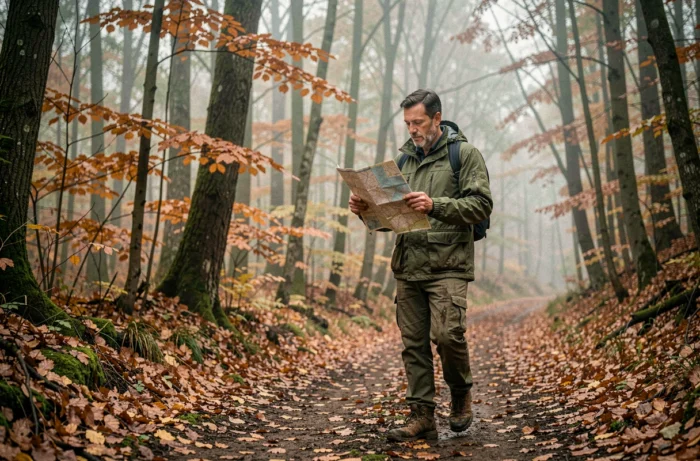
- Compatibility with work rhythm: an activity that requires fixed time slots during the week does not suit a variable schedule. Nature sports (hiking, trail running, archery) offer greater scheduling flexibility than club sports.
We observe that practitioners who combine a nature sport on the weekend with a short activity during the week (running, yoga) maintain their commitment well beyond the first year.
Creative activities and workshops: beyond decorative leisure
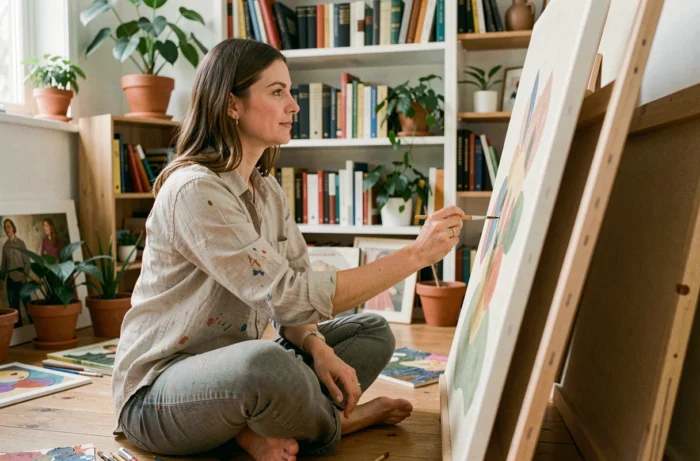
The trend of creative workshops (pottery, woodworking, sewing, watercolor) is not new, but its structuring has changed. Short formats of two to three hours, often offered in urban areas, allow for testing without commitment. The risk is remaining perpetually in a discovery phase without ever deepening.
A creative hobby becomes satisfying when it goes beyond the initiation stage. This requires regular investment, even modest: two sessions per month on the same medium for six months produce visible results. Flitting between occasional workshops mainly generates frustration.
Escape games, unusual visits, and experiential leisure
Escape games and immersive experiences have multiplied in medium-sized cities. This type of leisure operates on a different principle: occasional intensity rather than regularity. A family or friends escape game session involves problem-solving, communication under pressure, and time management.
Unusual visits (thematic urban tours, explorations of industrial heritage, night circuits) meet the same need for a memorable experience. They are particularly suitable for those who do not wish to commit to a weekly practice but want to break out of the streaming-restaurant cycle.
Family leisure: balancing shared activities and individual time
A common mistake is to seek a single leisure activity that satisfies all family members. An eight-year-old child, a teenager, and two adults do not have the same attention spans or sources of enjoyment. Adventure parks or days at a theme park work occasionally, but do not constitute regular leisure.
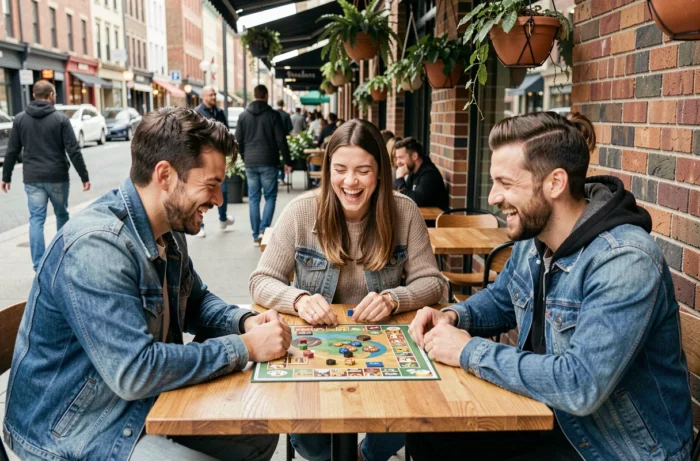
The most sustainable approach is to share a time slot rather than an identical activity. A Saturday morning where everyone engages in their own leisure (workshop, sport, games, reading) and then comes together creates more cohesion than a forced family outing that frustrates half the group.
For vacations or dedicated days, short-format activities remain the most suitable: family cooking workshops, introduction to an outdoor sport, guided tours with a playful angle. The decisive criterion is not the originality of the activity but the duration of commitment required from each participant.
The challenge of leisure in 2026 is no longer to find ideas; they are everywhere. It is about filtering, balancing depth and diversity, and protecting free time slots from passive absorption by digital media. Engaging in the same activity twice a week for three months establishes a habit more solidly than ten spaced discoveries over the same period.