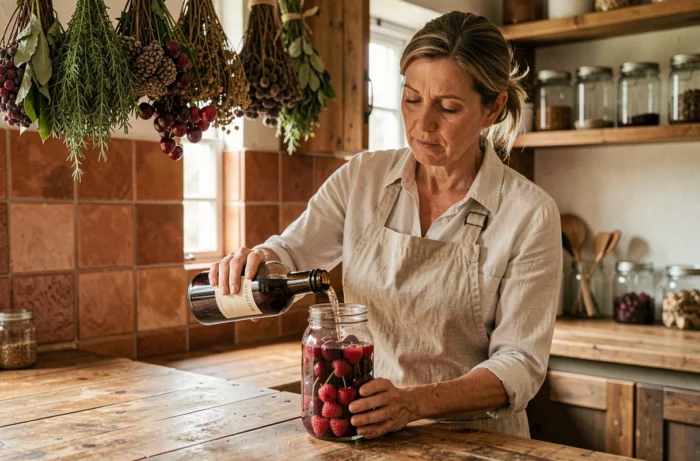
Putting cherries or mirabelles in a jar with alcohol is something most French families have done at least once. However, the choice of alcohol content determines the success or failure of the preservation. Alcohol at 90 degrees for fruits remains the reference for homemade preparations, but its use follows specific rules that many are unaware of.
Extraction of flavors and preservation: what 90 degrees really changes
Have you noticed that a fruit submerged in 40° vodka gives off much less aroma than a fruit macerated in 90° alcohol? The explanation lies in the ability of concentrated ethanol to dissolve aromatic molecules.
The higher the alcohol concentration, the faster volatile compounds (esters, aldehydes) transfer from the fruit to the liquid. At 90°, the extraction of flavors is both quicker and more complete. The fruit releases its aromas in a few weeks, whereas alcohol at 40° or 45° takes several months for a result that is often more bland.
The other direct advantage concerns long-term preservation. A 90° environment prevents any microbial proliferation. Yeasts and bacteria do not survive at this concentration. This is why jars of fruit in brandy prepared with 90° refined alcohol can be preserved for several years without sterilization, provided they remain tightly sealed, cool, and protected from light.
In comparison, 45° alcohol offers adequate protection, but there is a risk of renewed fermentation if the jar contains too much residual sugar. The RappelConso database has recorded several recalls of poorly stabilized artisanal beverages in recent years due to the risk of overpressure and container bursting related to renewed fermentation.
Choosing 90° alcohol for fruits from Leclerc or any other grocery store requires checking one fundamental point: it must be food-grade alcohol, also known as refined alcohol or neutral alcohol for fruits.
Food-grade or denatured alcohol: a confusion that can be dangerous
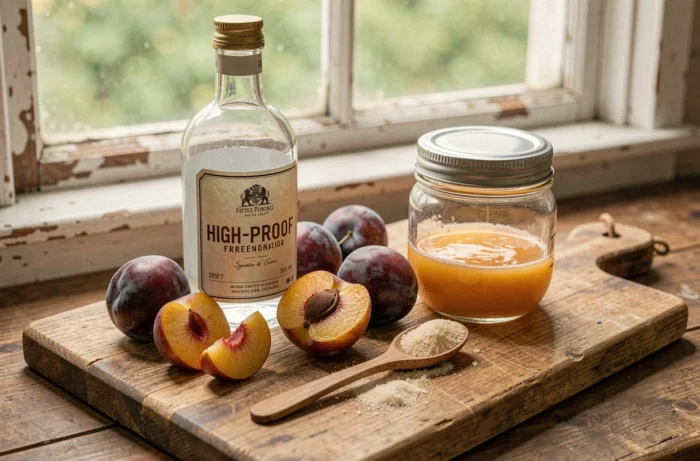
In pharmacies, the 90° alcohol sold for disinfecting surfaces is a denatured alcohol, unfit for consumption. Bitter agents (such as camphor or methanol) are added to make it undrinkable. Ingesting it can cause nausea, digestive lesions, or even severe poisoning.
Food-grade 90° alcohol, on the other hand, is pure ethanol of agricultural origin (beet, grape, wheat). It contains no additives or denaturants. It is the only one suitable for making homemade liqueurs, fruits in brandy, or aromatic tinctures.
Before purchasing, always check these three points:
- The label states “alcohol for fruits” or “refined alcohol,” confirming its food use.
- The product is sold in the grocery or spirits section, never in the drugstore or para-pharmacy section.
- No mention of “denatured,” “modified,” or “for external use only” appears on the bottle.
This distinction seems simple on paper. In practice, access to food-grade 90° alcohol in supermarkets has become more complicated in recent years. Some retailers have reduced their offerings in connection with policies to reduce the consumption of strong alcohol and recommendations from the DGCCRF.
Proportions and method for successful fruits in 90° alcohol
The basic recipe for fruits in brandy relies on a simple ratio. For every kilogram of fruit, count about one liter of alcohol and a quarter of that weight in sugar. These proportions vary depending on the fruit: cherries and plums require less sugar than pears, which are naturally less sweet.
Preparing the fruits before maceration
The fruits must be ripe, healthy, and free of mold. Wash them and dry them thoroughly. Prick each fruit with a needle to allow the alcohol to penetrate the flesh. For stone fruits (cherries, mirabelles), keep the pit: it adds a subtle almond note during maceration.
A quick blanching for two to three minutes in boiling water can be helpful for thick-skinned fruits like peaches. This step facilitates the exchange between the fruit and the alcohol.
Assembly and maceration time
Place the fruits in a glass jar with an airtight seal. Add the sugar, then pour the 90° alcohol until the fruits are completely covered. Close the jar and store it in a cool place, away from light.
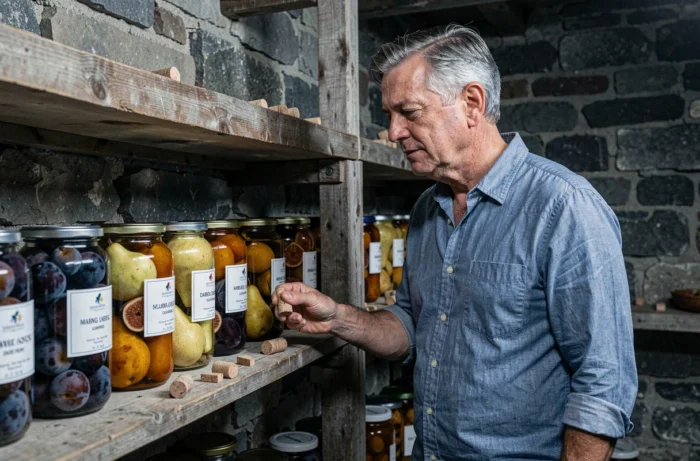
The minimum maceration time is three months. The flavors continue to develop well beyond that. Some preparations gain complexity after a year or two.
Homemade liqueurs from 90° alcohol: dilution and sugar dosage
90° alcohol is not meant to be consumed neat. To obtain a pleasant liqueur, it must be diluted. The principle is to add a sugar syrup (water and sugar heated together) to the filtered maceration.
Why start with 90° alcohol rather than an already diluted 40° alcohol? Because concentrated maceration preserves the aromas better. Dilution occurs afterward, allowing you to precisely dose the final degree of the liqueur according to your taste.
For red fruit liqueurs (blackcurrants, raspberries, blackberries), the result is generally better with a long maceration in 90° alcohol, followed by the addition of syrup. For aromatic plants (mint, verbena, sweet woodruff), the maceration can be shorter because the important oils transfer quickly into the concentrated alcohol.
- Filter the maceration through a fine cloth or coffee filter to remove pulp residues.
- Prepare a syrup by heating water with sugar, then let it cool completely before mixing.
- Add the syrup gradually and taste: the dosage depends on the aromatic intensity of the fruit and your preferences.
- Bottle in clean glass and store in a cool place.
Homemade liqueurs made with good quality alcohol and sufficient resting time are on par with commercial products. A jar of fruits in brandy or a bottle of artisanal liqueur also makes a appreciated gift, provided the basic rules are followed: food-grade alcohol, healthy fruits, clean and airtight jars.
90° alcohol for fruits remains the most reliable tool for long-term homemade preservation. The only truly decisive precaution is to never confuse the food version with the denatured version from pharmacies. Everything else comes down to patience and the pleasure of watching your jars slowly mature on the shelf.