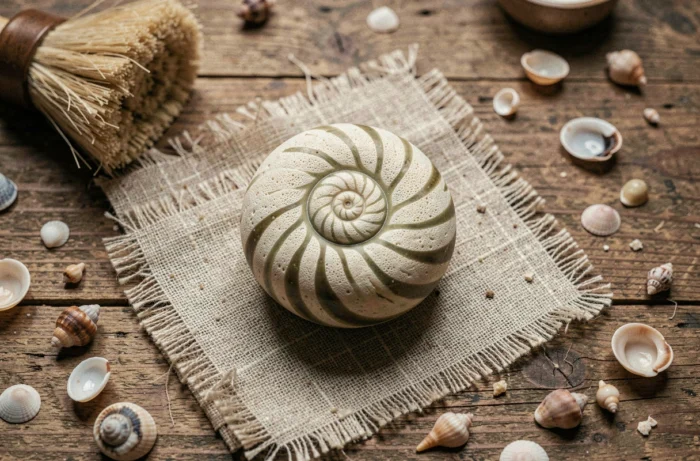
The eye of Saint Lucia is a calcareous operculum produced by the mollusk Bolma rugosa, found in the Mediterranean. Its smooth, spiral, and pearly face makes it a sought-after material for handmade jewelry. Transforming this raw operculum into a pendant or earrings requires careful cleaning due to its fragile nature, as limestone reacts poorly to common chemicals and abrasive methods.
Regulations on Shell Collecting in France
Before discussing cleaning, it is important to address a point that most tutorials overlook. The Environmental Code and the law governing the public maritime domain regulate the collection of shells, pebbles, and sand from French beaches. The fine can reach 1,500 euros if the quantity collected is deemed unreasonable or if the area has special protection (nature reserve, marine park).
For jewelry creators, the distinction lies between the occasional collection of a few opercula found on the sand and systematic collection intended to support a craft or commercial activity. The latter practice may fall under unreasonable collection, especially in Corsica or in the marine protected areas of the Mediterranean coast.
The recommendation from environmental associations is clear: prioritize photography and limit collection to the strict minimum. Those wishing to create a piece of jewelry with an eye of Saint Lucia from found pieces in quantity can turn to specialized suppliers who sell already sorted opercula.
Cleaning the Eye of Saint Lucia: What Limestone Requires
The operculum is composed of calcium carbonate. This fact dictates the entire cleaning method. White vinegar, lemon, descalers, and silver jewelry cleaners attack the limestone and irreversibly dull the pearly surface.
Soaking and Gentle Brushing
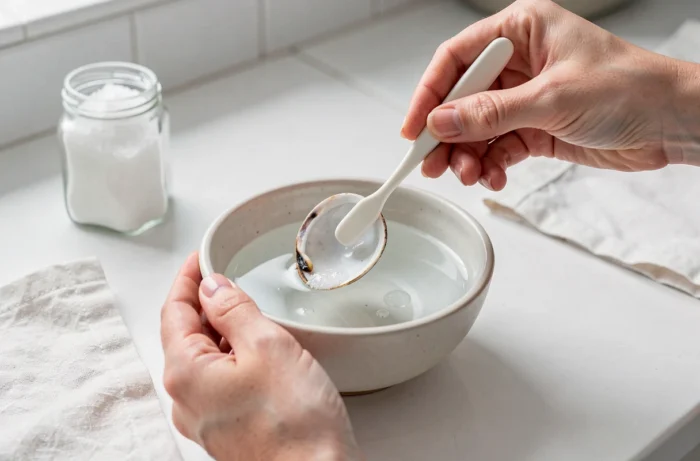
The safest method is to soak the operculum in warm water mixed with a few drops of neutral dish soap for one to two hours. This bath softens organic residues (algae, marine deposits) without damaging the material.
A soft toothbrush is sufficient to dislodge impurities embedded in the grooves of the convex face. Brush in light circular motions, focusing on the edge of the spiral where deposits accumulate. Rinse with clear water, then air dry on an absorbent cloth.
What to Avoid
- Ultrasonic devices, which weaken the calcareous structure and can cause micro-cracks invisible to the naked eye
- Vinegar and any acid, even diluted, which dissolve the pearly layer and make the operculum dull
- Perfumes and alcohol-based products applied directly to the piece, as alcohol gradually dulls the limestone
- Drying with a hairdryer or any direct heat source, which can cause the operculum to crack if it still contains internal moisture
Polishing an Eye of Saint Lucia Before Setting into Jewelry
A raw operculum collected from the beach often has roughness on its flat face and dull areas on the spiral. Polishing aims to reveal the natural pattern without altering the thickness of the piece, which remains thin (a few millimeters).
Sanding begins with fine-grit sandpaper, beyond 800. A grit that is too coarse scratches the limestone permanently. Work dry, making light and even passes over the face you wish to smooth. Frequently check the surface condition by moistening the piece with your fingertip: water temporarily reveals the final finish.
To achieve a shiny appearance, switch to very fine grit or use a polishing paste for soft stones, applied with a microfiber cloth. The result depends on the initial quality of the operculum. Some have a well-contrasted spiral, while others remain pale even after polishing. Field reports vary on this point: geographic origin and the age of the mollusk seem to play a role, although this is not systematically documented.
Setting and Protection: Transforming the Operculum into a Pendant or Earrings
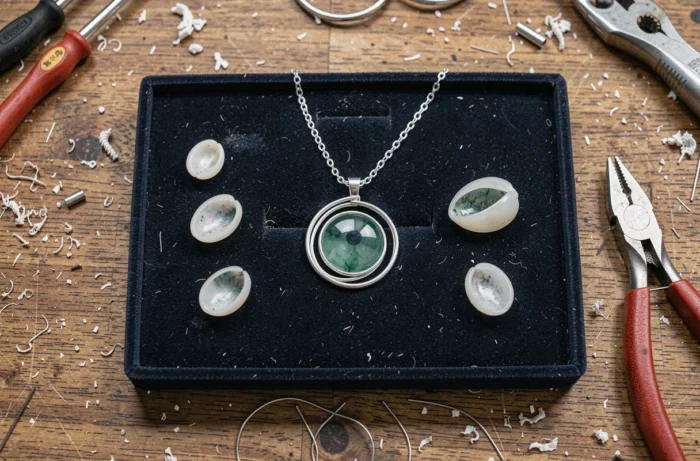
The cleaned and polished operculum can be set in several ways. Silver setting remains the most common choice for eye of Saint Lucia jewelry, as silver highlights the white-orange contrast of the spiral.
For a metal-free setting, clear epoxy resin offers an alternative. It encases the operculum, protects it from shocks, and allows for creating shapes (cabochon, drop, disk) suitable for a pendant or bracelet. The application requires precise dosing of the hardener and complete drying time before any handling.
Drilling the Operculum
Direct drilling is risky. The limestone easily cracks under the effect of an unsuitable drill bit. Use a small diameter diamond drill bit while keeping the piece submerged in a shallow pool of water to prevent overheating. Drill slowly, without excessive pressure. Despite these precautions, breakage remains common with thin or old opercula.
The most reliable alternative is to glue a flat bail to the back of the operculum with a two-component epoxy glue. This method avoids any mechanical stress on the piece and allows for disassembly later if necessary.
Long-Term Care for Eye of Saint Lucia Jewelry
Once set, the jewelry remains sensitive to the same agents as the raw operculum. Repeated contact with perfume, acidic sweat, or cosmetic products gradually alters the nacre. Removing the jewelry before showering or swimming in a pool (chlorine is particularly aggressive) extends its lifespan.
A simple cleaning with mild dish soap remains the safest maintenance method, both for the shell and the silver setting. A quick pass with a chamois cloth suitable for silver jewelry is enough to revive the shine of the metal without risking damage to the operculum, provided you do not rub the calcareous surface directly with the impregnated product.
The spiral of the eye of Saint Lucia retains its pattern for years if these precautions are followed. The limestone eventually develops a slight patina, which, for many wearers, is part of the charm of jewelry made from a raw natural material.