
The Panier, in the 2nd arrondissement of Marseille, shows a significant decrease in overall crime in recent years, confirmed by several security analyses published in 2025-2026. The residual risks pertain to opportunistic petty crime, not organized violence.
Actual criminological profile of the Panier compared to sensitive areas of Marseille
There is a considerable gap between the media perception of the Panier and the ground data. The neighborhood does not appear in any classification of areas to avoid established by recent security analyses, unlike La Castellane, La Bricarde, or Félix Pyat.
The recorded incidents in the area are almost exclusively related to snatch thefts and pickpockets, concentrated along the passageways between the Old Port and the Vieille Charité. This type of opportunistic crime correlates with tourist density, not structural crime.
A real estate report published in 2026 ranks the Old Port and the Panier among neighborhoods offering a lively yet generally safe environment. The compromise for residents and visitors boils down to accepting noise, high foot traffic, and theft risks, without the levels of violence observed in certain northern neighborhoods. Those questioning the danger of the Panier neighborhood in Marseille will find a clear discrepancy between the reputation and the available data.
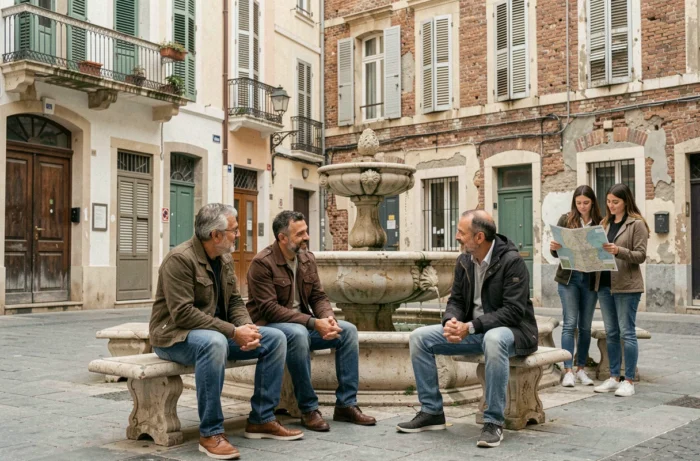
Petty crime in the Panier: mechanisms and timings to know
Opportunistic crime in the Panier follows predictable patterns. Identifying these patterns allows for concrete adjustments to one’s movements.
Peak times and areas of concentration
Snatch thefts and pickpockets primarily operate during the day when visitor density is at its highest. The narrow alleys between Place de Lenche and Montée des Accoules create natural congestion points conducive to close physical contact.
At night, the risk changes in nature: it is no longer about pickpockets but wandering in poorly lit and almost deserted streets. The Panier literally empties after the restaurants close, creating a stark contrast to the daytime activity.
Target profile
- Cruise ship passengers who disembark for a few hours, recognizable by their visible camera equipment and hesitant gait in the alleys, are the primary target of pickpockets
- Visitors looking at their phones while walking in narrow passages expose themselves to snatch thefts by individuals on two-wheelers
- People lingering in small squares with open bags or bags placed on the ground facilitate the work of pickpockets who operate in pairs
Disruptions and unsanitary conditions: the real irritants of the neighborhood
The perceived danger in the Panier is not solely due to crime. We find that daily nuisances weigh more heavily on quality of life than actual security risks.
Overtourism has transformed the commercial structure of the neighborhood. Local shops have gradually given way to tourist boutiques and snack bars. A member of the neighborhood interest committee summarizes the situation: historic small businesses have disappeared, replaced by seasonal activities that close for several months a year.
The explosion of Airbnb rentals generates recurring neighbor conflicts. Nocturnal noise disturbances related to short-term rentals are a major complaint of permanent residents. This phenomenon, documented by several local reports, contributes to the exodus of long-time residents from the neighborhood.
Concrete cases of unsanitary conditions in some old buildings in the Panier have been reported by local media. This issue, distinct from security concerns, directly affects living conditions and can surprise short-term renters who discover degraded common areas.
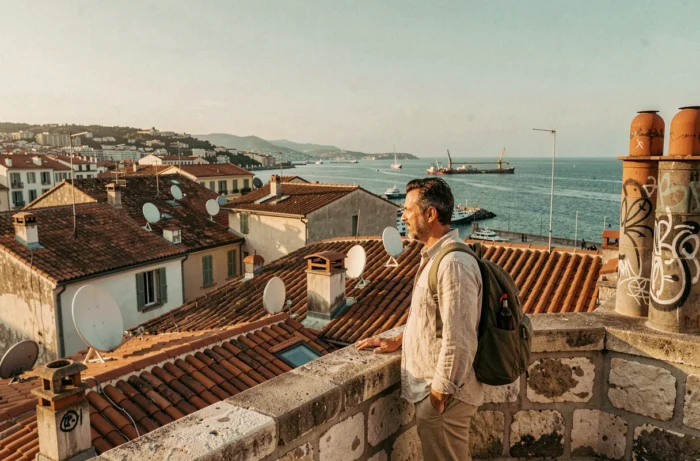
Surveillance and security measures in the Panier area
The Panier benefits from its immediate proximity to the Old Port, a priority surveillance area for Marseille law enforcement. This security coverage of the hyper-center has contributed to the decrease in recorded crime in the area in recent years.
Increased vigilance at night remains the main individual security lever. The streets of the Panier do not all have effective public lighting, and some passages between buildings remain dark even early in the evening.
- Favor main routes (Rue du Panier, Rue du Petit-Puits) rather than secondary paths after nightfall
- Carry bags crossbody on the wall side in narrow alleys to limit exposure to snatch thefts from two-wheelers
- Avoid lingering in deserted squares after shops close, particularly Place des Moulins and Place de Lenche
- Do not leave visible items in a parked vehicle near the neighborhood, as car break-ins remain frequent in the hyper-center
The Panier is not a dangerous neighborhood in the criminological sense. It is an old, dense, touristy area where opportunistic petty crime coexists with issues of nuisances and unsanitary conditions that affect daily life more than physical safety. The alleys of the Panier remain pleasant to walk through both during the day and early evening, provided the precautions described above are applied, especially on secondary routes after shops close.